

Spine Care
Can acupuncture help a back that keeps hurting?
Where electroacupuncture fits, what the research actually says, and how we decide whether care is helping.
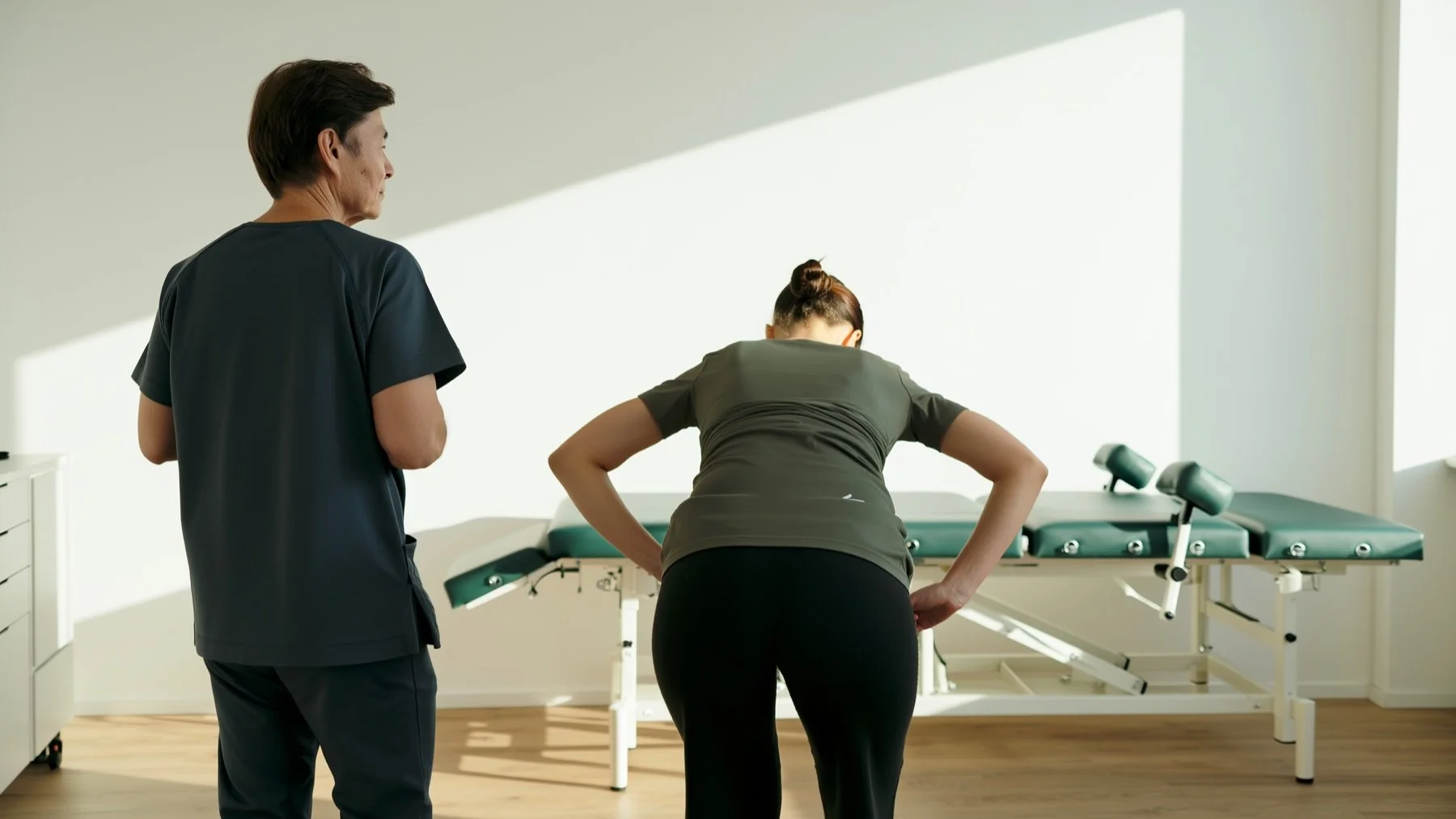
A back that keeps hurting can turn ordinary decisions into negotiations. Which chair? How long can I drive? Is picking up the laundry going to become an event? My first question is not simply where it hurts. I want to know what your back is keeping you from doing.
Start with an explanation, not a promise
Persistent back pain can involve several things at once: irritated joints, sensitive nerves, muscle tension and changes in how you move. An examination helps us decide what needs attention and whether another medical evaluation should come first. A scan is useful when indicated, but a scan alone does not tell the whole story of your symptoms.
At ATRIUM, the spine assessment includes your history, movement, relevant symptoms and goals. We choose treatment from those findings. The aim is less pain and easier function, measured against something that matters to you.
What electroacupuncture adds
Electroacupuncture sends a controlled electrical pulse between selected acupuncture needles. The intensity is adjusted to your comfort; stronger is not automatically better. It is central to my spine care approach when appropriate. Precise bodywork for the muscles and surrounding soft tissues, followed by reassessment and a manageable home plan, may accompany it.
It is reasonable to think of this as working with pain signaling and muscle responses. It is not evidence that we are rebuilding a disc, reversing arthritis or replacing a surgery that is medically necessary.
The evidence, without the sales pitch
The American College of Physicians includes acupuncture among initial non-drug options for chronic low-back pain, alongside approaches such as exercise and rehabilitation. That is support for considering it, not a guarantee for every back problem. [1]
In a 2020 trial of 121 adults, electroacupuncture did not significantly outperform sham treatment on the primary pain outcome. It did improve back-related disability more than sham on a secondary measure. Both findings belong in the conversation. This study also excluded radiculopathy, so it should not be presented as proof about every case of sciatica. [2]
How I judge progress
We can track sitting tolerance, walking, sleep and the activity you want back, alongside pain. A better hour on the table is welcome; a better week in your life is more useful. If progress stalls, we reassess the plan instead of repeating it indefinitely.
New difficulty urinating, loss of bladder or bowel control, numbness around the groin, or rapidly worsening leg weakness needs emergency assessment. Those symptoms should not wait for an acupuncture appointment.
For persistent symptoms without those warning signs, the next step is an individual assessment. You do not have to decide on an entire program before we meet.
Sources and further reading
- ACP guideline: noninvasive care for low-back pain (2017)
- Kong and colleagues: electroacupuncture trial (2020)
Educational information, not an individual diagnosis or treatment plan. Results vary. Research discussed here did not test the ATRIUM program as a whole.
Your first visit includes a consultation, assessment and treatment when appropriate. A program is a separate decision.
Book Spine Assessment ↗Free tool
Track it for 2 weeks
A 30-second daily check-in for pain, sleep, stress and energy. Your entries stay on your phone, and your log gives us a head start at your visit.
Open the free tracker