

Spine Care
Your back needs a home plan, not a second full-time job
Small, repeatable steps between visits can make a treatment plan easier to use in real life.
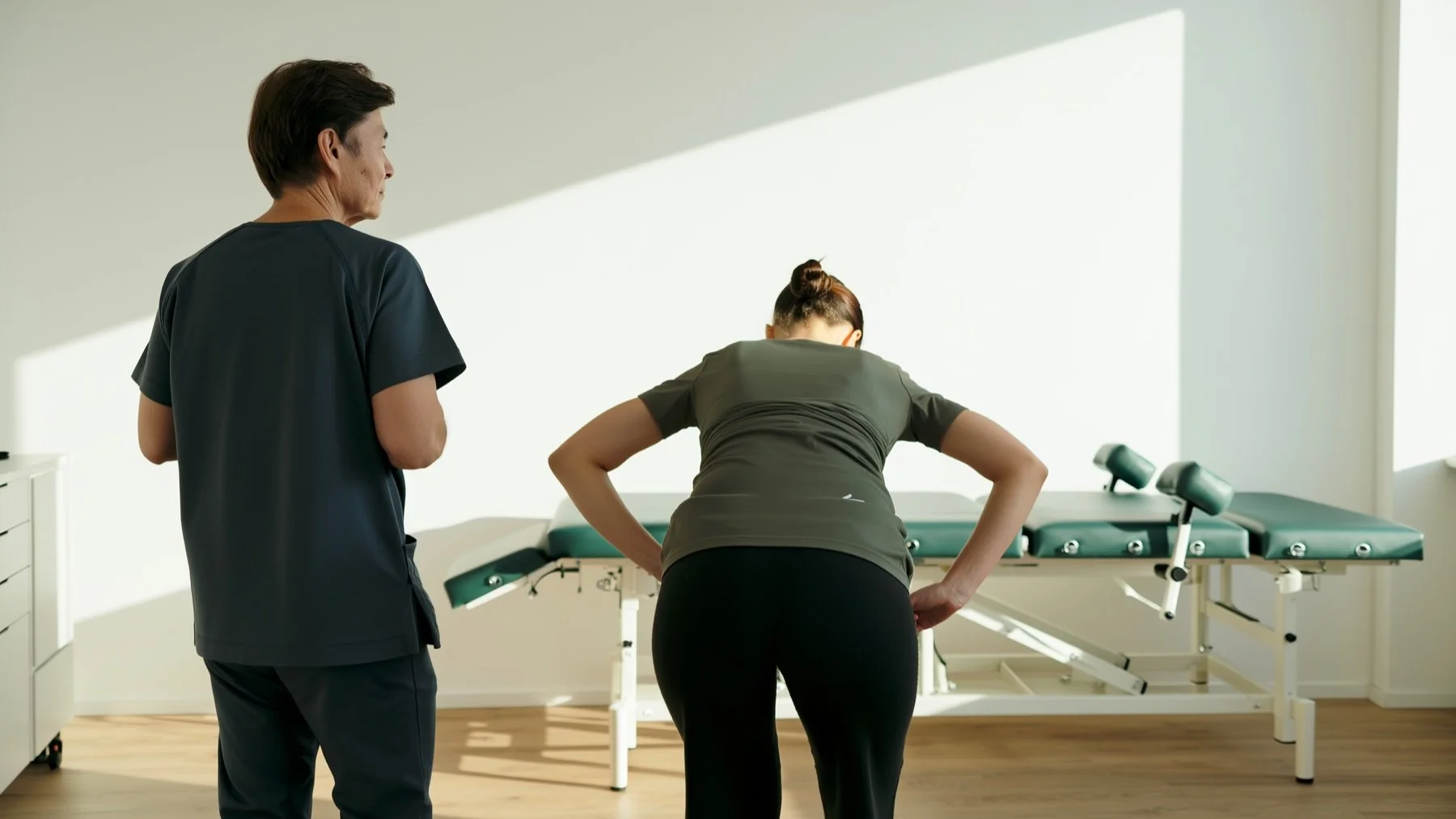
If a home program needs forty minutes, six props and the floor space of a small gym, it may be beautifully designed and completely ignored. I would rather start with a few useful actions you can actually repeat.
Choose the right starting point
Back pain is not one condition. Your comfortable walking time, exercise history, neurological symptoms and medical findings matter. The right plan after a recent flare may look different from the right plan once things settle.
Start by choosing one ordinary activity you want to improve: a walk around the block, getting out of a chair or working at your desk. Note your current tolerance. That gives us something more useful than a vague goal to strengthen everything.
Walking can be a sensible foundation
The 2024 WalkBack trial studied adults who had recently recovered from an episode of low-back pain. An individualized, progressive walking and education program delayed activity-limiting recurrences compared with no intervention: the median time to recurrence was 208 days versus 112 days. [1]
This was walking plus education, not a promise that any walk will fix an active flare. It supports a gradual, personalized approach after recovery. Your starting distance and progression should reflect your health and tolerance.
Keep the plan small enough to use
At an assessment, we can choose a short walk, a movement break and one or two exercises that match your findings. I want you to know why each item is there, what it should feel like and when to modify it.
For desk work, changing position regularly may be more realistic than trying to hold one perfect posture all day. For exercise, a repeatable amount is generally a better starting point than a heroic session followed by three days of regret.
Exercise is among the non-drug options recommended for chronic low-back pain. There is no requirement that your program look impressive on camera. [2]
Let your response shape the next step
Track how you feel during the activity and afterward. A movement that consistently sends pain farther down your leg, increases numbness or causes weakness needs reassessment. Do not force a stretch through those symptoms.
Tools can be useful when selected and demonstrated for you. A roller, support or release tool is not automatically suitable just because someone else likes it. We can review pressure, placement and whether you should use it at all.
New bladder or bowel control problems, inability to urinate, groin numbness or rapidly worsening weakness requires emergency care. Otherwise, bring your questions and your actual routine to the visit. The best home plan is one that fits both your back and your day.
Sources and further reading
- Pocovi and colleagues: WalkBack randomized trial (2024)
- ACP guideline: exercise and other noninvasive back-pain care (2017)
Educational information, not an individual diagnosis or treatment plan. Results vary. Research discussed here did not test the ATRIUM program as a whole.
Your first visit includes a consultation, assessment and treatment when appropriate. A program is a separate decision.
Book Spine Assessment ↗Free tool
Track it for 2 weeks
A 30-second daily check-in for pain, sleep, stress and energy. Your entries stay on your phone, and your log gives us a head start at your visit.
Open the free tracker